
The British Museum (BM), UK 

About
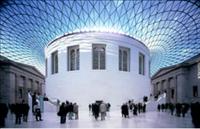
The British Museum, ‘a museum of the world, for the
world’, is one of the world’s pre-eminent museums with over 7
million registered objects, attracting around 6 million visitors a
year. The collections cover world cultures from ~ 1,200,000 BCE to
the present day. Alongside the eight curatorial departments, the
Department of Conservation and Scientific Research (established in
the 1920s) is responsible for the preservation and conservation,
study and interpretation of the collections.
The Department of Conservation and Scientific Research is
responsible for the conservation, preservation, technical
examination and analysis of all the Museum’s collections. The
department has around 75 full time staff (~55 conservators and 16
scientists) but welcomes a large number of visiting museum
professionals, fellows, graduate students and interns every
year.
The department or its staff members have been involved in a number
of collaborative research projects, several of which are on-going
(e.g. VASARI, MARC, LabsTECH, Eu-ARTECH, Heritage Intelligence,
MODHT).
Relevant experience and role
Expertise of the department in the documentation,
preservation, treatment, examination and analysis of the
collections will be brought to the CHARISMA project, helping to
ensure that the research and networking activities can be linked
directly to museum/institutional practice and context, both at the
partner institutions and more widely. Scientific research is
focussed under 4 main themes and covers materials of nearly every
type:
• Study of deterioration of materials, new treatment methods
and preventive conservation research
• Development of new analytical methods and protocols
• Research into materials and techniques and their
archaeological, historical and cultural significance
• Identification of materials
 With the
increasing interest in new conservation approaches and the
development of new analytical methods and protocols, and
particularly the application of non-invasive techniques, the Museum
collaborates to the research activities in optimising the range of
new portable instrumentation and innovative methodologies for
in-situ diagnostics and conservation offering a ‘users’ perspective
as well as the to the implementation of a portal to cultural
heritage knowledge.
With the
increasing interest in new conservation approaches and the
development of new analytical methods and protocols, and
particularly the application of non-invasive techniques, the Museum
collaborates to the research activities in optimising the range of
new portable instrumentation and innovative methodologies for
in-situ diagnostics and conservation offering a ‘users’ perspective
as well as the to the implementation of a portal to cultural
heritage knowledge.
The main research effort will be on Innovative methodologies and
instrumentation for laboratory research, focusing on methods for
the spatially resolved characterisation of organic materials, the
study of organic colorants in ancient and contemporary art and
fluorescence multi-spectral imaging. The first area of
research will support existing research on the chromatographic
characterisation of amorphous organic materials such as varnishes,
binders, adhesives and food residues). Natural and synthetic
organic colorants are found widely represented throughout the
collections and provide particular preservation and conservation
challenges. Research interests in this area beyond CHARISMA include
characterisation of colorants in archaeological textiles and
ethnographic colorants. Research under Multispectral imaging and
spectroscopy in diffuse reflectance mode and fluorescence will
build on experience gained during A.W. Mellon-funded work on
in-situ technical imaging and the application of Infrared and
photo-induced luminescence imaging to the characterisation of
Egyptian Blue and Han Blue (
http://www.britishmuseum.org/about_this_site/audio_and_video/conservation_and_science/egyptian_blue.aspx).
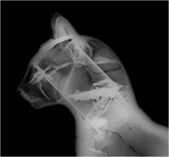
As part of the CHARISMA project, access to the Museum’s curatorial, conservation and scientific archives is being offered via ARCHLAB programme. Access to the primary image, spectral and analytical data and to reference collections of samples will also be offered where appropriate. The British Museum also hopes to make its facilities available to the project to host roundtables and a larger thematic workshop. Scientific research facilities available in-house include: microscopy (metallographic, biological, petrographic, boroscopy; VP-SEM and FE SEM both with EDX); X-ray based or elemental techniques (X-ray diffractometry, X-ray fluorescence spectrometry, ICP-AES); chromatographic facilities (GC-MS, HPLC-PDA, ion chromatograph); spectroscopic methods (Raman and FTIR spectroscopy and microscopy) and imaging capabilities (X-radiography, infrared reflectography, visible and ultraviolet luminescence imaging).
The Museum is committed to making information about it collections and research available as widely as possible, and interested to extend this to analytical data. The British Museum is therefore also involved in the networking activity aiming at developing best practice and protocols toward common standards being responsible for Integration of technical data.
Website address:
www.britishmuseum.orgwww.britishmuseum.org/the_museum/departments/conservation_and_scientific.aspx
Team Leader
Name: Dr David Saunders, Keeper of Conservation and Scientific ResearchAddress: Department of Conservation and Scientific Research, The British Museum, 40, Great Russell Street, London, WC1B 3DG, UK
E-mail: [email protected]

