
Budapest Neutron Centre trough Institute of Solid State Physics and Optics, Budapest, HU 
Program: FIXLAB the platforms of European large and medium scale facilities – PLATFORM BAccess Provider: BNC-RISP Research Institute of Solid State Physics and Optics (RISSPO), Institute of Isotopes (IKI) and Research Institute for Particle and Nuclear Physics (KFKI RMKI ) at the Budapest Neutron Centre
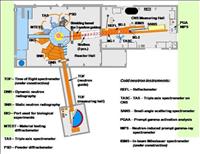
FIXLAB (PLATFORM B) Available facility: Neutron Techniques at the Budapest Neutron Centre
Through the Research Institute of Solid State Physics and Optics (RISSPO) two other research institutes (KFKI RMKI and IKI) of the Hungarian Academy of Sciences are participating to CHARISMA, forming together the neutron platform of the project BNC-RISP, and offering the access to neutron techniques of the 10 MW Budapest Research Reactor (BRR) complemented with external-beam PIXE and XRF techniques of the KFKI RMKI.
The Research Institute of Solid State Physics and Optics
RISSPO-HAS operates several neutron beam-line instruments. As
“workhorse instruments” a small angle scattering (SANS) and a
triple axis spectrometer (TAS) both installed on neutron guides of
the cold neutron source, are in current use. Another TAS instrument
and a 4-circle materials test diffractometer are installed on
thermal neutron beams. 3 diffractometers are available for various
kinds of structural studies.
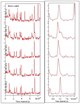 One of
the most relevant instruments for heritage studies is a recently
built time-of-flight (TOF) monochromator instrument on a thermal
neutron beam. This unique type of TOF powder diffractometer is used
on a continuous beam chopped to produce several well-defined
wavelength bands, which vary periodically within a selected
wavelength range.
One of
the most relevant instruments for heritage studies is a recently
built time-of-flight (TOF) monochromator instrument on a thermal
neutron beam. This unique type of TOF powder diffractometer is used
on a continuous beam chopped to produce several well-defined
wavelength bands, which vary periodically within a selected
wavelength range.
This type of instrument largely outperforms a conventional crystal
monochromator powder diffractometer (within the resolution range of
1-5×10⁻³ for dd/d) when both are housed on the same reactor
source.
Services currently offered by RISSPO-HAS:
Neutron diffraction applications,
-Phase analysis of composition. (p.e: composition of alloys)
-Internal stress (strain analysis). (hammering, heat treatment,
ageing)
-Texture analyses
-Structural analysis of single crystal. (gem, precious stone,
etc.)
-Structure determination of polycrystalline samples.
The Institute of Isotopes
IKI-HAS
has been a pioneer in using neutrons for investigation of object of
cultural heritage. Neutron-induced prompt gamma activation analysis
is an important and relatively new technique, which has gained
importance with the advent of high resolution germanium detectors
and guided neutron beams from nuclear reactors.
Based on the radiative neutron capture process or (n,γ) reaction,
it enables a non-destructive, matrix-free all-element analysis with
a wide linear dynamic range. With the help of a comprehensive PGAA
data library, it is suitable for the determination of elemental and
even isotopic composition of irradiated samples on major- and trace
level as well. It is applicable, when bulk elemental analysis is
required on a sample of any physical or chemical form (solid,
powder, liquid or even gas), and at least 0.1-1 g of material is
available.
Analysis of well defined spots on large objects (sculptures,
vessels) is also feasible.
The KFKI Research Institute for Particle and Nuclear Physics
In the
KFKI RMKI-HAS, which also runs an experimental beam-line on
the cold neutron source for neutron reflectometry, there is a
long tradition of non-destructive elemental analyses of cultural
heritage objects using mainly the external milli-beam PIXE
technique and versatile compact XRF spectrometers of both
radioisotope and mini X-ray tube excitation heads.
The cost-effective “on the campus” availability of these
important techniques could significantly enhance the efficiency of
a research project offering the possibility of fast orienting pilot
studies for successive neutron measurements and complementing
surface analyses to the bulk analyses like PGAA. The external
target holder arrangement and the very flexible small XRF devices
allow the analysis of even large and heavy art and archaeological
objects, while the analysis by micrometer size internal beam is
also possible.
Provider’ general information:
Website address:
www.bnc.huwww.rmki.kfki.hu/
WELCOME DESK Contact Person:
Name: Dr Zsolt Kasztovszky
Phone: +36 1 392-2539E-mail [email protected]

